
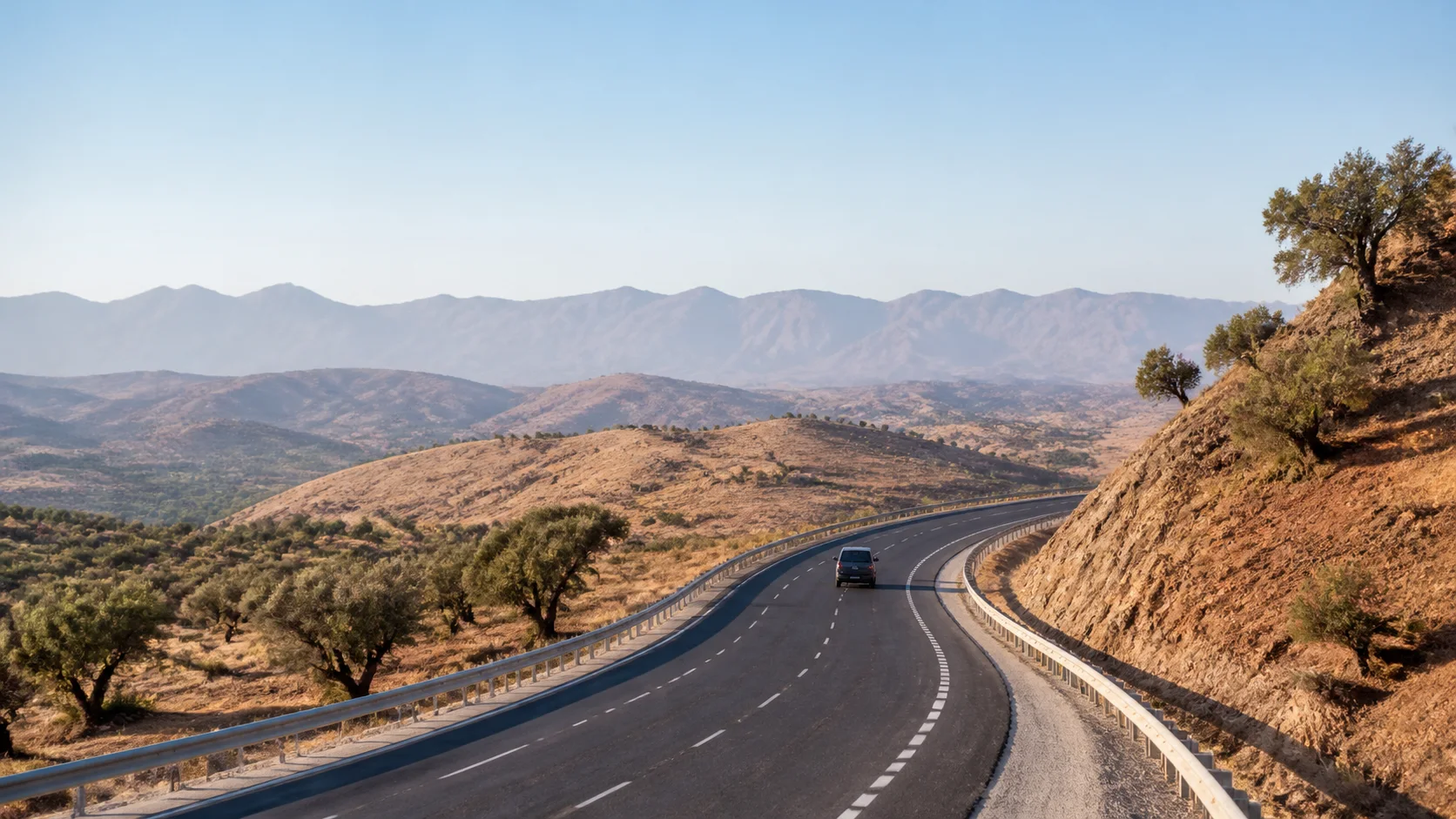
Plan the Marrakech to Agadir drive with worthwhile stops, good places to eat, and practical tips for buying argan oil, amlou and local crafts.
The Marrakech to Agadir road is more than a transfer between two cities. In about 230 kilometres, the A3 motorway leaves Marrakech’s dry plains, crosses the western High Atlas foothills and descends through argan country toward the Atlantic. Driving without a long stop usually takes around three hours, but allowing four to six hours turns the journey into a relaxed road trip with time for food, views and local shopping.
Marrakech to Agadir route at a glance
| Route detail | Practical answer |
|---|---|
| Main road | A3 motorway via Chichaoua, Imintanoute, Argana and Amskroud |
| Distance | About 230 km |
| Driving time | Around 3 hours without an extended stop |
| Comfortable plan | 4–6 hours with one meal and one shopping or photo stop |
| Best departure | Morning, especially in summer or when continuing to the coast |
The motorway is the simplest and most predictable route. Morocco’s motorway operator lists exits for Chichaoua, Imintanoute, Argana and Amskroud on this section. Service and rest areas are available across the network, so use signed exits and established facilities rather than stopping on the shoulder for a photograph.
The best stops between Marrakech and Agadir
1. Chichaoua: breakfast, crafts and an easy first pause
Chichaoua is the first useful cultural stop after leaving Marrakech. The surrounding province sits between mountain foothills and open plains, and its official tourism guide highlights weaving, jewellery, artisan cooperatives and local olive oil. It works well for a short break before the road begins to feel more mountainous.
For a morning journey, look for a busy local café serving mint tea, coffee, msemen, bread, eggs or amlou. Around lunchtime, a simple tajine or grilled brochettes is usually a better road meal than an elaborate multi-course lunch. Choose a clean, well-frequented café and confirm the price before ordering if no menu is displayed.
- Good to eat: msemen, eggs, mint tea, tagine or grilled brochettes.
- Good to buy: sealed local olive oil, a small woven piece or modest handmade craft.
- Suggested stop length: 30–60 minutes.
2. Imintanoute: High Atlas foothills and a traditional lunch
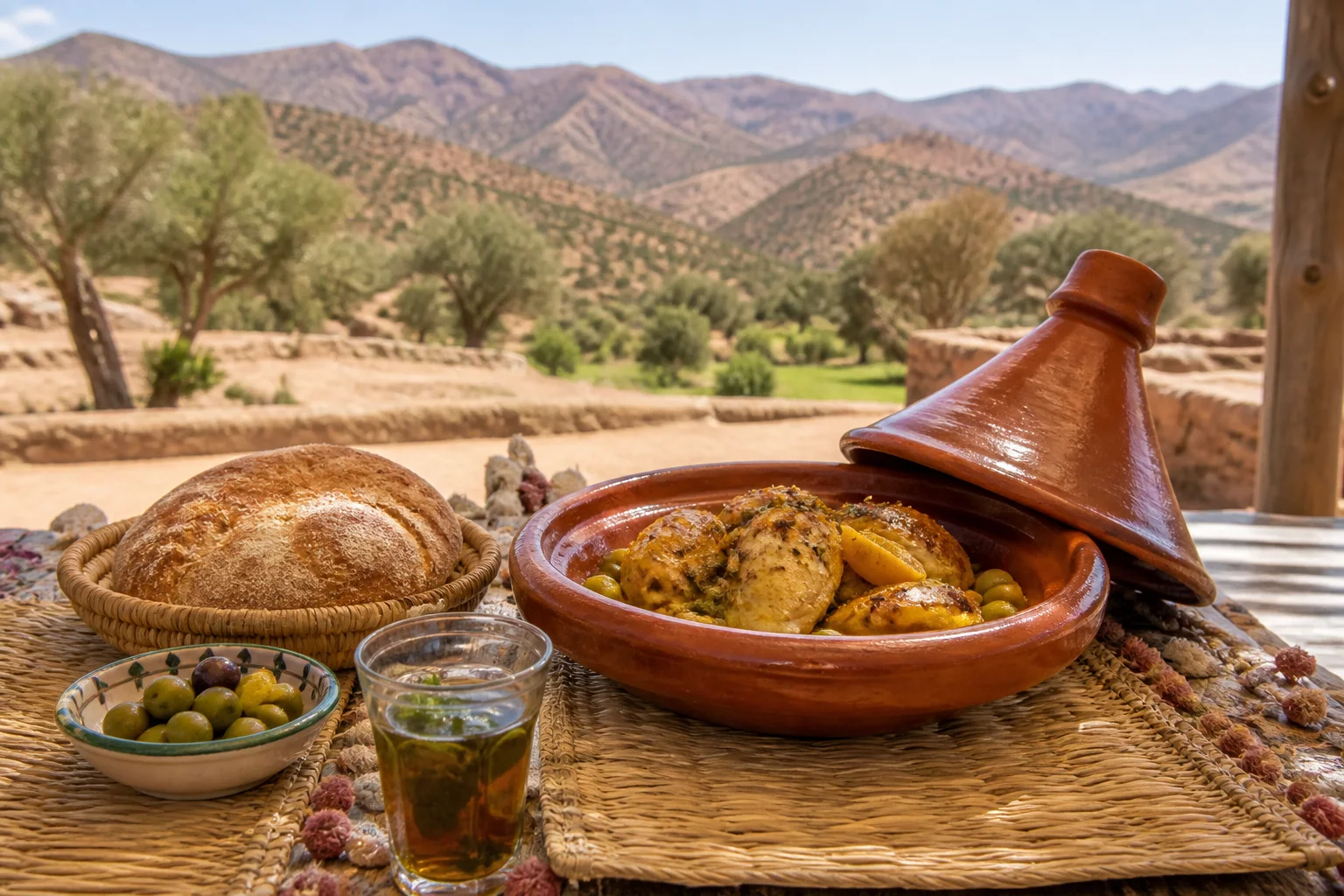
Imintanoute is a practical halfway-style break near the western High Atlas foothills. It is a better choice when you want a proper meal rather than only coffee. Small restaurants and cafés commonly prepare slow-cooked tagines, soups, bread and tea. Locally made couscous and pantry staples also appear in cooperative shops around the wider province.
Ask what has been prepared that day instead of ordering a complicated dish from a long menu. Freshly cooked tagine takes time, so let your driver or server know how long you can stop. If you are travelling with children, keep water and a light snack in the vehicle because service rhythms can be slower outside the cities.
3. Argana and Amskroud: argan landscapes and local products
After Imintanoute, the road passes through the Arganeraie landscape before descending toward Souss-Massa. UNESCO describes this vast biosphere reserve as a globally distinctive argan ecosystem shared across Marrakech-Safi and Souss-Massa. This is the most meaningful part of the drive for buying argan products—provided you choose a transparent cooperative or established shop.
Argana is suited to a brief scenic or service stop. Amskroud, closer to Agadir, is convenient for a final pause and for exploring cooperative products. Avoid roadside displays that interrupt traffic or use animals as a photo attraction. A good purchase supports real production and comes in a sealed container with ingredients, volume and producer information.
What local products are worth buying?
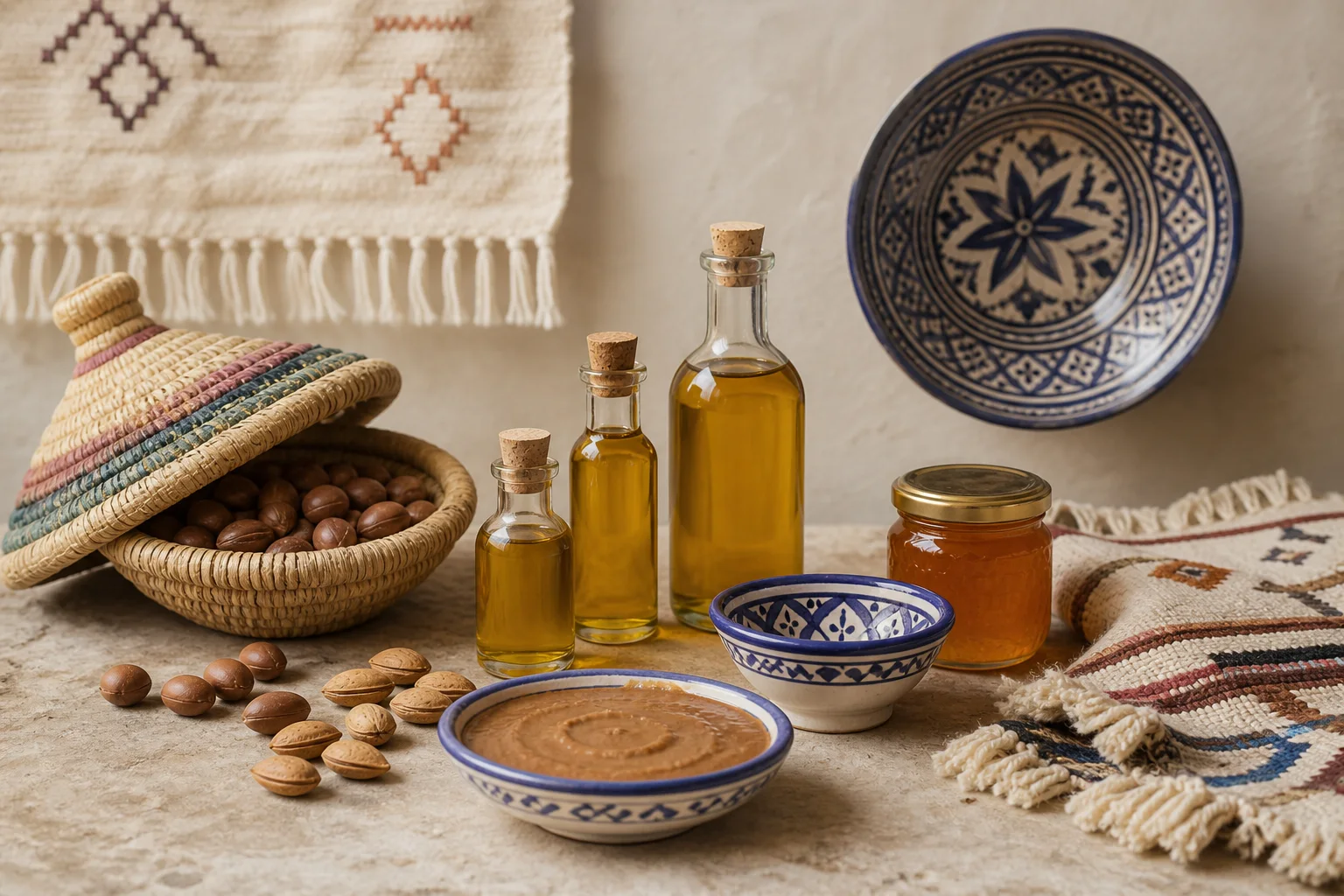
- Culinary argan oil: toasted, nutty and intended for food. Check that the bottle is sealed and clearly marked for culinary use.
- Cosmetic argan oil: unroasted and sold for skin or hair. Keep it separate from the bottle you plan to eat.
- Amlou: a rich spread made from almonds, argan oil and honey; excellent with bread at breakfast.
- Souss honey: look for a stated origin and producer rather than an unlabelled decorative jar.
- Small crafts: woven baskets, ceramics, textiles and useful handmade pieces travel more easily than fragile oversized souvenirs.
A tasting is helpful, but it is not proof of quality. Read the label, distinguish food oil from cosmetic oil and ask whether a cooperative can explain where and how its product was made. Buy a size you can pack safely, and check airline liquid rules before putting oil or honey in hand luggage.
Where to eat and shop after arriving in Agadir
If you prefer to keep the road journey short, save your main shopping for Souk El Had in Agadir. Morocco’s national tourism office recommends it for fruit, spices, clothing, leatherwork and copper goods, while the regional tourism guide presents it as one of the city’s essential markets. It offers more choice than a quick motorway stop and gives you time to compare quality and prices.
For food, try a Souss breakfast with tafarnout or batbout bread, olive or argan oil, honey and amlou. At lunch, choose a slow-cooked tajine or local couscous; near the coast, grilled fish and seafood are natural choices. A busy restaurant with visible turnover is generally a better signal than a doorway aimed only at passing tourists.
Which stop plan fits your trip?
| Travel style | Recommended plan | Extra time |
|---|---|---|
| Fast transfer | One motorway rest-area break | 20–30 min |
| Food-focused | Lunch in Imintanoute | 60–90 min |
| Local products | Chichaoua craft stop plus an Amskroud cooperative | 90–150 min |
| Relaxed road trip | Chichaoua, lunch near Imintanoute and argan shopping | 2–3 hours |
Frequently asked questions
Is the Marrakech to Agadir road suitable for families?
Yes. The A3 motorway is the straightforward option, and planned rest stops make the journey manageable with children. Request an appropriate child seat when booking and carry water, sun protection and a light snack.
Can a private driver wait while we eat or shop?
Usually, but agree on the stop plan before departure. A brief comfort break is different from a long restaurant meal or detour, and extended waiting may affect the quote or arrival time.
Is Taroudant a stop on the direct route?
Not on the fastest motorway route. Taroudant is a rewarding destination for its souks, leatherwork, argan oil and saffron, but it is better planned as a deliberate detour or a separate excursion from Agadir rather than a quick comfort stop.
What is the best time to leave Marrakech?
A morning departure gives you the most flexibility for a meal and shopping stop and avoids arriving after dark. In summer, an earlier start also keeps the first part of the journey cooler.
A simple final plan
For most travellers, the best balance is breakfast or coffee in Chichaoua, a proper meal near Imintanoute, and a carefully chosen argan-product stop closer to Amskroud. Continue to Agadir for the widest souvenir selection at Souk El Had. The result is still an easy one-day journey, but it feels like an introduction to the landscapes, food and craft traditions of south-west Morocco rather than three hours spent watching the motorway.