
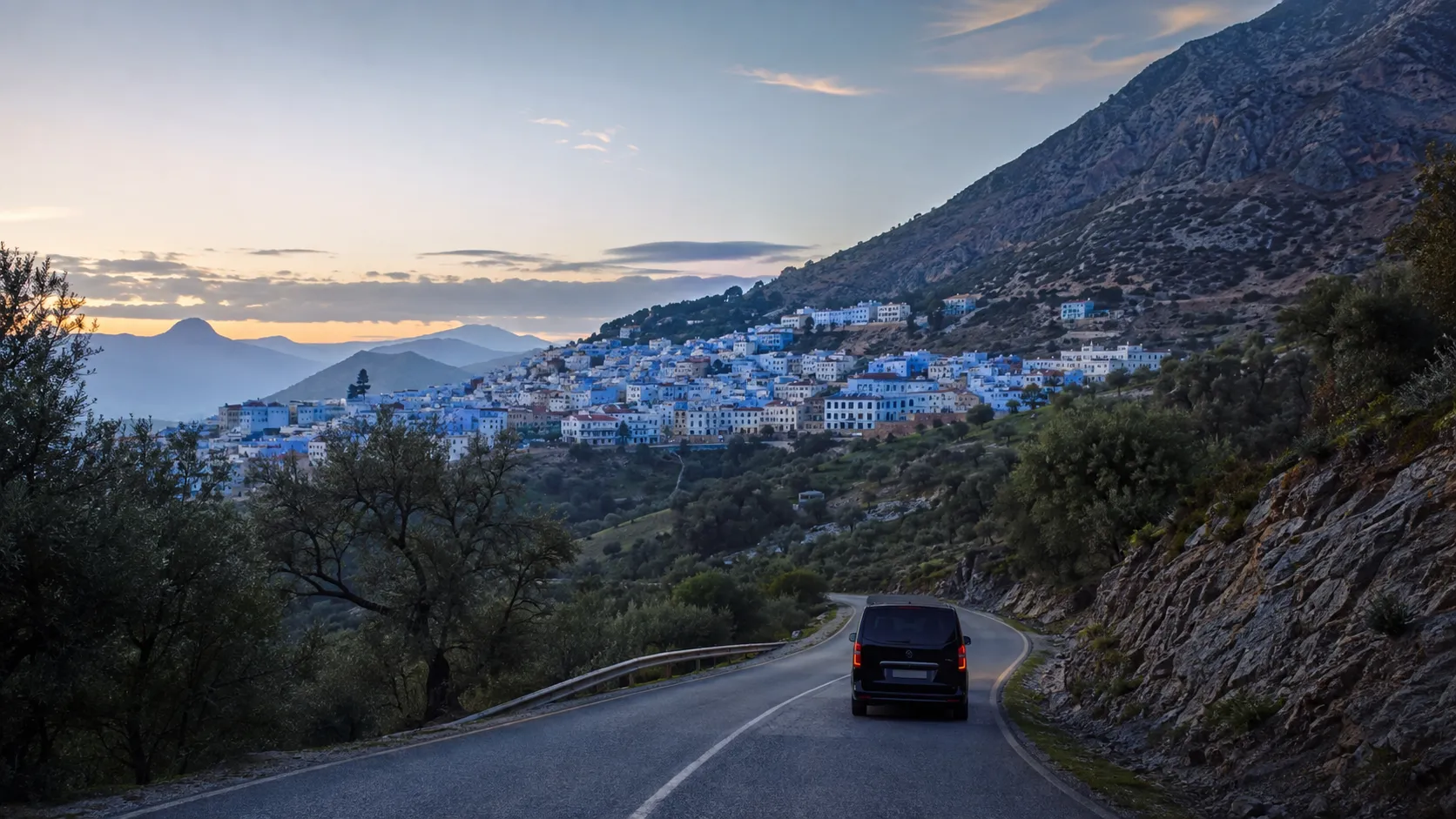
Plan Marrakech to Chefchaouen with realistic driving times, worthwhile stops, local food, and practical advice for buying Rif crafts and products.
Marrakech to Chefchaouen is one of Morocco's longest classic city-to-city journeys. The practical road route is roughly 567 kilometres and takes close to eight hours of driving before meal and comfort stops. Allow nine to ten hours for a direct private transfer, or divide the journey over two days if you want to explore Rabat properly. Chefchaouen is not a sensible day trip from Marrakech: stay at least one night so the long drive leads to real time in the Blue City.
Marrakech to Chefchaouen at a glance
| Route detail | Practical answer |
|---|---|
| Main route | Marrakech → Settat → Casablanca bypass → Rabat/Kenitra → Ouazzane → Chefchaouen |
| Road distance | About 567 km |
| Driving time | Around 7.5–8 hours without meaningful stops |
| Realistic direct transfer | 9–10 hours with two breaks and normal traffic |
| Comfortable cultural route | Two days with an overnight stop in Rabat |
| Best local-product stop | Ouazzane for traceable extra-virgin olive oil |
The first part uses toll motorways across central Morocco. After the Rabat and Kenitra area, the landscape becomes more rural before the final winding approach through the Rif foothills. Traffic around Casablanca and Rabat, rain or fog in the north, and slow vehicles on the mountain section can all extend the day. Leave early, travel in daylight where possible and avoid promising a fixed arrival minute.
The best stops between Marrakech and Chefchaouen
1. Settat or a motorway service area: the efficient first break
After an early departure, a staffed service area near Settat is the easiest place for toilets, coffee, water and breakfast without entering town traffic. When you want a sit-down meal, choose a busy grill near the motorway and ask what is already prepared. Eggs, msemen, bread, olive oil and mint tea work well in the morning; brochettes, lentil soup, tagine and Moroccan salads make a straightforward lunch.
- Keep the first stop to 20–40 minutes if Chefchaouen is the same-day destination.
- Use official service areas rather than stopping on the motorway shoulder.
- Carry passports, money, medicine and electronics whenever you leave the vehicle.
2. Rabat: the strongest cultural stop
Rabat is the best substantial stop, but it changes the journey from a transfer into a full travel day. For a focused visit, choose the blue-and-white Kasbah of the Udayas and a nearby lunch rather than trying to cover every monument. Rue des Consuls in the medina is known for silver jewellery and Rabati carpets; Souika and Souk Sebbat add leather goods, slippers, fabrics, pastries and spices. The Oulja craft complex in Salé is the better detour for pottery, basketry and wrought iron.
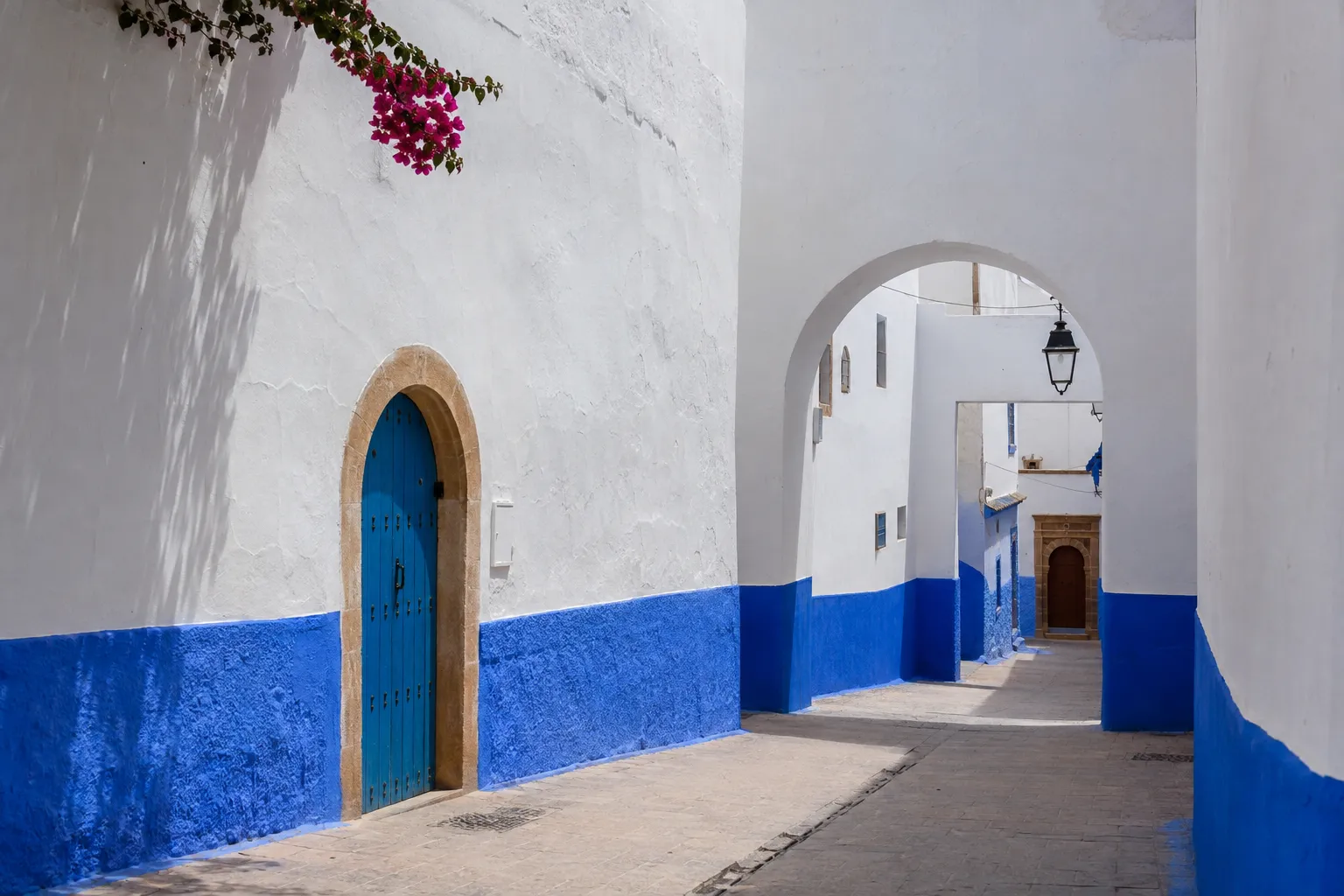
Allow at least two extra hours for one Rabat neighbourhood, parking and lunch. If you want the Udayas, Hassan Tower, the medina and craft shopping, sleep in Rabat and continue north the next morning. That produces a much better visit and keeps the final Rif road in daylight.
3. Kenitra corridor: a practical second comfort stop
If you skip central Rabat, take a short service-area break around the Rabat–Kenitra corridor. This is the last easy point for predictable motorway facilities before the route becomes more rural. Keep lunch simple and refuel here if needed, especially when travelling in the evening or outside peak season.
4. Ouazzane: olive country before the Rif
Ouazzane is the most relevant local-product stop near the end of the route. Its extra-virgin olive oil has a protected geographical indication in Morocco. Buy from an established producer, cooperative or food shop that shows the origin and seal rather than accepting an anonymous roadside bottle. A labelled tin is usually easier to pack than glass.
- Look for the producer, origin, volume, harvest or best-before information and an intact seal.
- Ask to taste the oil from a clean sample before choosing a larger container.
- Keep edible oil away from heat and place it in a leakproof bag for the journey or flight.
- Treat Ouazzane as a 30–45 minute stop unless it is part of a planned overnight route.
Where to eat on the route
| Stop | Good choice | Planning note |
|---|---|---|
| Settat/service area | Msemen, eggs, coffee or a light tagine | Fastest breakfast or early lunch |
| Rabat | Grilled fish, brochettes, salads or a seasonal tagine | Best combined with one cultural area |
| Kenitra corridor | Coffee, soup or a simple grill | Practical when bypassing Rabat |
| Ouazzane | Olives, bread, tagine and seasonal local dishes | Confirm opening hours and service time |
| Chefchaouen | Goat cheese, bissara, tagine, bread, honey and tea | Save the most memorable meal for arrival |
Do not turn every pause into a large meal. A light breakfast, one proper lunch and sealed water are easier on a long travel day. Choose busy, clean restaurants with a short menu, ask what is fresh and confirm the price before ordering. If you expect to reach Chefchaouen late, ask the accommodation about dinner before leaving Marrakech.
What to eat in Chefchaouen
Chefchaouen's medina is best enjoyed slowly after the road. Fresh bread and carefully prepared tagines are everyday anchors, while northern Morocco is particularly associated with goat cheese. A local breakfast of fresh cheese, bread, olive oil, olives and honey is a gentle start after a long transfer. Bissara, a warm broad-bean soup finished with olive oil and cumin, is especially welcome on a cool morning.
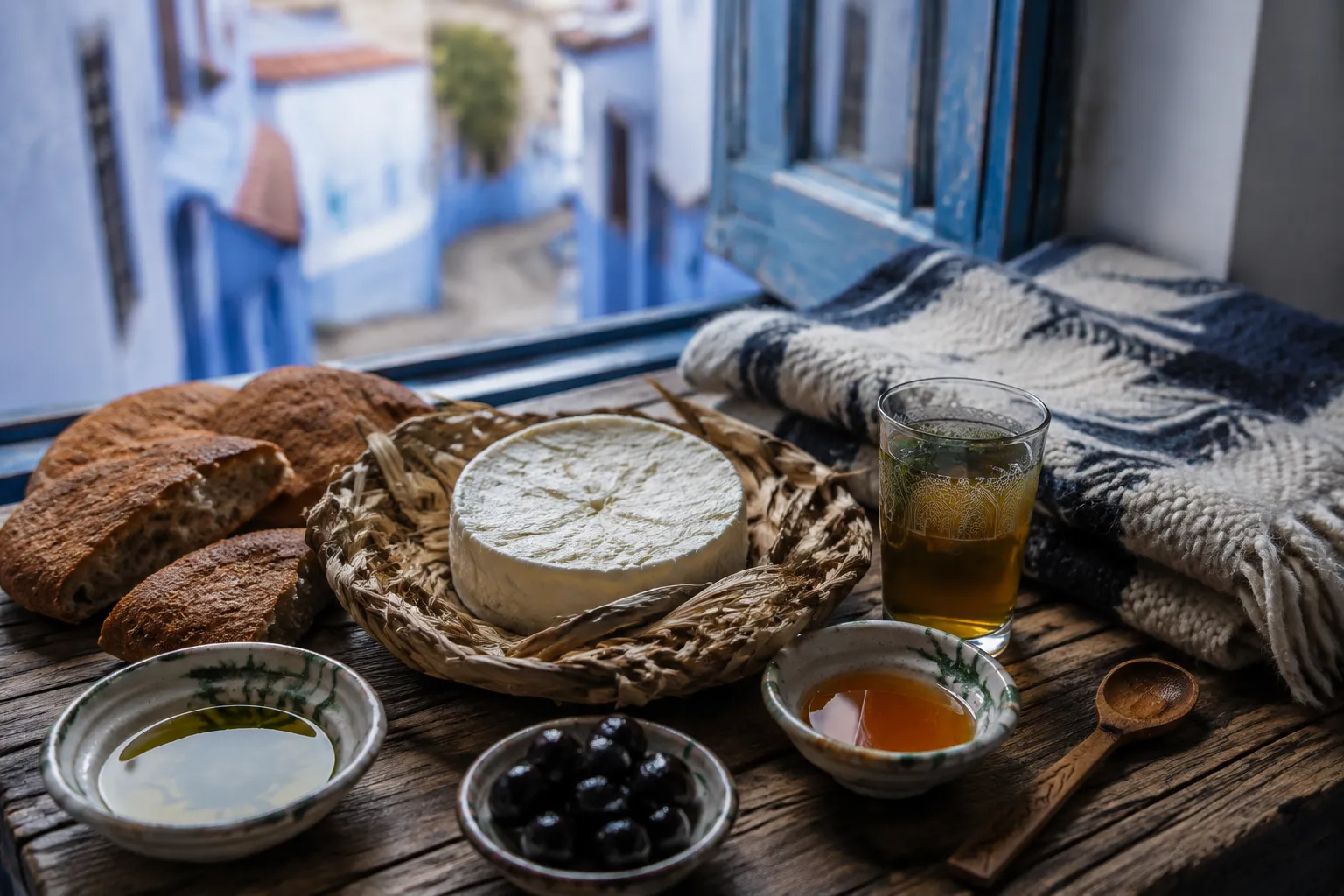
- Fresh goat cheese: eat it chilled and buy only when you can keep it cold.
- Bissara: a filling, inexpensive soup for breakfast or a cool evening.
- Rif-style tagine: ask about the day's vegetables, herbs and meat rather than ordering from a generic list.
- Maloui or msemen with honey: an easy café breakfast or afternoon snack.
- Mint tea: enjoy it in a café around Outa El Hammam or on a quieter terrace away from peak foot traffic.
Souvenirs and local products worth buying
Chefchaouen's official tourism guide highlights woodwork, wool and leather trades. The medina contains both locally made pieces and generic goods brought from elsewhere, so ask where an item was made and who produced it. A small woven textile, carved wooden utensil or well-finished leather piece is easier to carry and more meaningful than a mass-produced blue souvenir.
- Wool blankets and woven textiles: inspect the weave, edges, fibre and colourfastness; ask whether the piece is handmade.
- Woodwork: check that carved spoons, boxes or small objects are smooth, dry and free of cracks.
- Leather goods: examine seams, lining, fastenings and dye transfer before negotiating.
- Chefchaouen goat cheese: a recognised regional product, but suitable only when refrigeration is available.
- Olive oil, honey and Rif almonds: prefer sealed, labelled products with a clear producer and origin.
Bargain politely where prices are not displayed, but compare workmanship first. Request a receipt for valuable rugs, jewellery or antiques and do not buy archaeological objects, protected wildlife products or anything a seller cannot document legally. For food taken on a flight, check the destination country's customs rules before purchasing.
What to see after you arrive
Start with Outa El Hammam square, the kasbah gardens and the lanes of the old medina. Continue to Ras El Ma when you still have daylight. The climb toward the Spanish Mosque gives a broader view, but it is better the next morning if you arrive tired. Akchour and Talassemtane National Park require a separate day, suitable footwear and current local advice; they are not quick additions to the Marrakech transfer.
Choose the right itinerary
| Travel style | Suggested plan | Expected duration |
|---|---|---|
| Direct private transfer | Two service breaks, light lunch, Chefchaouen check-in | 9–10 hours |
| Rabat express stop | Udayas, lunch, then direct to Chefchaouen | 11–12 hours |
| Two-day cultural route | Night in Rabat; Ouazzane stop on day two | Most comfortable |
| Food and products | Settat breakfast, Ouazzane oil, Chefchaouen dinner | 9.5–10.5 hours |
Practical road advice
- Leave early and avoid planning a same-day return; Chefchaouen deserves at least one overnight stay.
- Choose the vehicle for luggage as well as passenger count on this long route.
- Send the exact accommodation pin; some medina stays require a short walk from the vehicle drop-off.
- Bring a light layer because the Rif can feel cooler and wetter than Marrakech.
- Keep some Moroccan dirhams for tolls, cafés and small purchases even when the main transfer is prepaid.
- Check weather, road conditions, shop hours and attraction access on the day of travel.
Frequently asked questions
How far is Chefchaouen from Marrakech?
The practical road journey is about 567 kilometres. Driving takes close to eight hours before substantial stops; a private transfer normally needs nine to ten hours with comfort and meal breaks.
Can Marrakech to Chefchaouen be a day trip?
No. A return trip would mean roughly sixteen hours of driving before breaks or sightseeing. Travel one way, stay at least one night and preferably give Chefchaouen a full day.
What is the best stop between Marrakech and Chefchaouen?
Rabat is the best cultural stop and works especially well as an overnight stage. Choose Settat for an efficient meal, Kenitra for a practical motorway break, or Ouazzane for traceable olive oil near the final section.
What food is Chefchaouen known for?
Fresh goat cheese is the most distinctive regional product. Also try local bread, olive oil, olives, honey, bissara and a seasonal tagine. Ask what was prepared that day rather than relying on an oversized tourist menu.
What souvenirs should I buy in Chefchaouen?
Look for well-made wool textiles, small woodwork and carefully finished leather goods. For edible gifts, choose sealed olive oil, honey or Rif almonds with producer and origin details. Fresh cheese needs refrigeration and is not suitable for every onward journey.
A balanced two-day plan
Leave Marrakech after an early breakfast, take a short service stop near Settat and reach Rabat for lunch. Walk the Kasbah of the Udayas and sleep in the capital. Continue after breakfast through the Kenitra corridor, pause in Ouazzane for labelled olive oil and arrive in Chefchaouen with daylight. Check in, walk to Outa El Hammam and save Ras El Ma, the Spanish Mosque and unhurried craft shopping for the following day.