
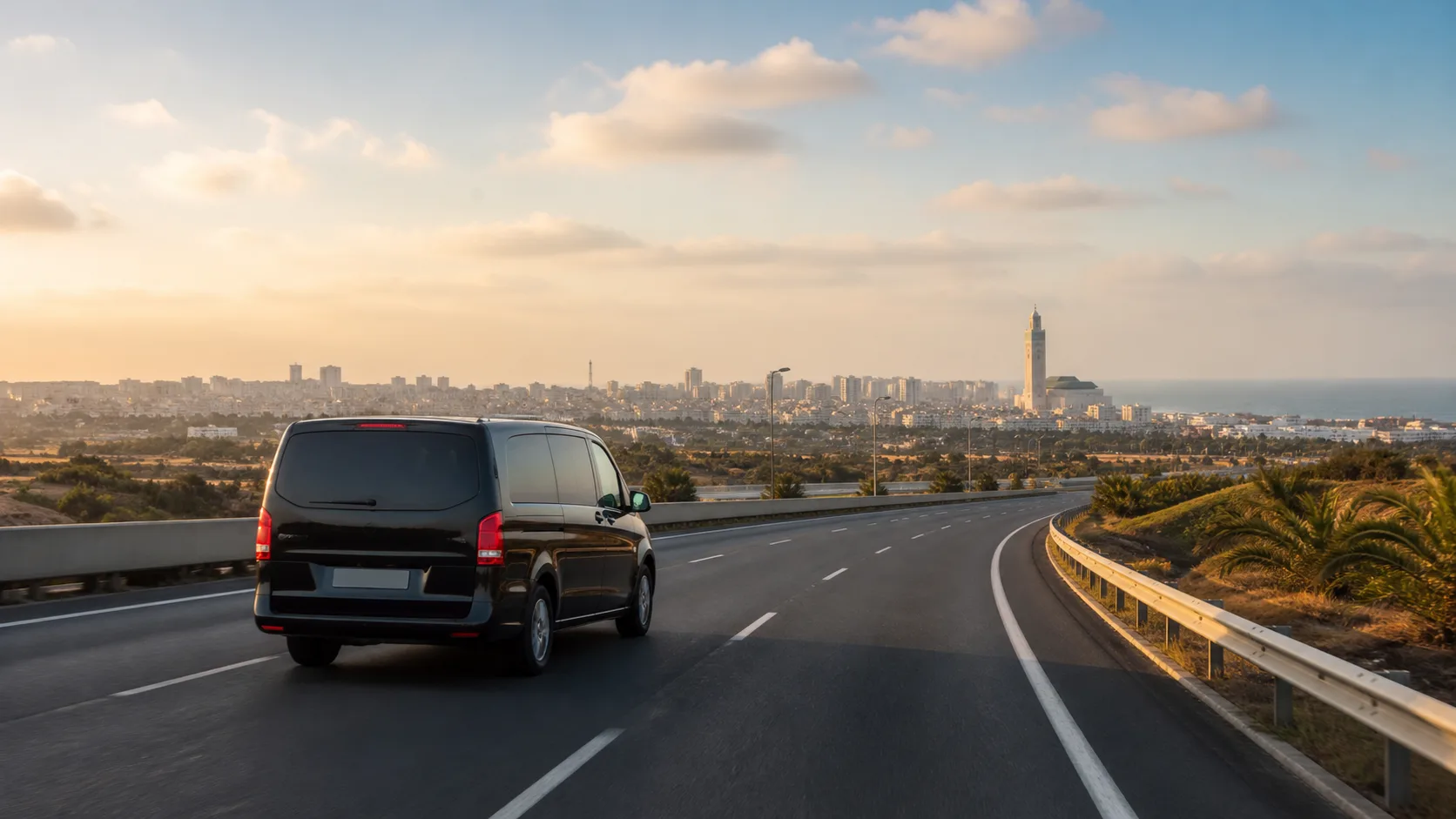
Plan Marrakech to Casablanca with practical stops, local food ideas, and useful advice for buying crafts, pastries, olives and other souvenirs.
Marrakech to Casablanca is one of Morocco's easiest intercity road journeys, but it deserves more planning than the distance suggests. The motorway route is about 239 kilometres and takes roughly two and a half hours without stops. Allow three to three and a half hours for a comfortable private transfer, and more during busy periods at the Casablanca entrance. If you have time, a practical break near Settat or Bouskoura can turn the transfer into a relaxed introduction to Morocco's economic capital.
Marrakech to Casablanca at a glance
| Route detail | Practical answer |
|---|---|
| Main road | Tolled motorway via Benguerir, Settat and Berrechid |
| Road distance | About 239 km to central Casablanca |
| Driving time | About 2.5 hours in light traffic |
| Comfortable transfer | 3–3.5 hours with one short break |
| With sightseeing | 5–7 hours, depending on the chosen stop |
| Airport note | Mohammed V Airport and Casablanca city use separate booking routes |
This is primarily a motorway transfer rather than a scenic back-road excursion. The best strategy is to keep the road stops simple and save most of your time for Casablanca. Traffic can build around Berrechid, Bouskoura and the city approaches, so a driver should base the pickup time on your flight, meeting or hotel check-in—not only on the map's fastest estimate.
Worthwhile stops between Marrakech and Casablanca
1. A motorway service stop after Benguerir
For an early departure, the first useful pause is a staffed motorway service area after Benguerir. It is the quickest place for toilets, coffee, water and a light breakfast without losing time in town traffic. Choose packaged snacks for the vehicle and eat hot food at the table rather than carrying it into the car.
- Quick breakfast: msemen, eggs, bread, olive oil and mint tea when available.
- Road supplies: sealed water, fruit and a small snack rather than a heavy meal.
- Comfort: use official service areas and avoid stopping on the motorway shoulder.
2. Settat: the best halfway break
Settat is the most practical town stop, about midway through the journey. A café or grill near the motorway is enough for a 30-minute break; entering the centre makes sense only when you want a longer lunch. Ask what is already prepared if your schedule matters. Grilled meat, brochettes, lentil soup, tagine and Moroccan salads are straightforward road-day choices.
Settat belongs to the agricultural Chaouia area, but roadside products are not automatically local. If you buy honey, olive oil or couscous, look for a sealed container showing the producer, origin, ingredients and net weight. A tidy cooperative shop or established food store is a safer choice than an unlabelled bottle offered beside the road.
3. Bouskoura Forest: fresh air before the city
Around 20 kilometres south of Casablanca, Bouskoura Forest is an optional final pause for travellers who would rather stretch their legs than visit another market. The regional tourism office describes this large eucalyptus forest as Greater Casablanca's green lung. Allow 30–45 minutes, stay on used paths and do not leave phones, passports or visible luggage unattended in the vehicle.
The best first stops in Casablanca
Hassan II Mosque and the Atlantic waterfront
The Hassan II Mosque is Casablanca's defining landmark, set directly beside the Atlantic. The exterior esplanade and ocean setting are impressive at any suitable time; interior access follows official guided-visit sessions. Check the Hassan II Mosque Foundation's current timetable before leaving Marrakech, especially on Fridays, religious holidays or during Ramadan.
After the visit, continue along the waterfront toward the Corniche if traffic and weather allow. The route opens onto cafés, restaurants and long Atlantic views. It is a pleasant sunset plan, but not the best place to shop for traditional crafts—save that for Habous.
Habous Quarter: crafts, olives and Moroccan pastries
Habous, also called the New Medina, is the strongest all-round stop for souvenir shopping. Its arcades and small squares are easier to navigate than many old medinas, while shops sell carpets, hammered metalwork, colourful ceramics, carved wood, leather and traditional clothing. The regional tourism office also highlights the olive market and long-established Moroccan pastry shops.
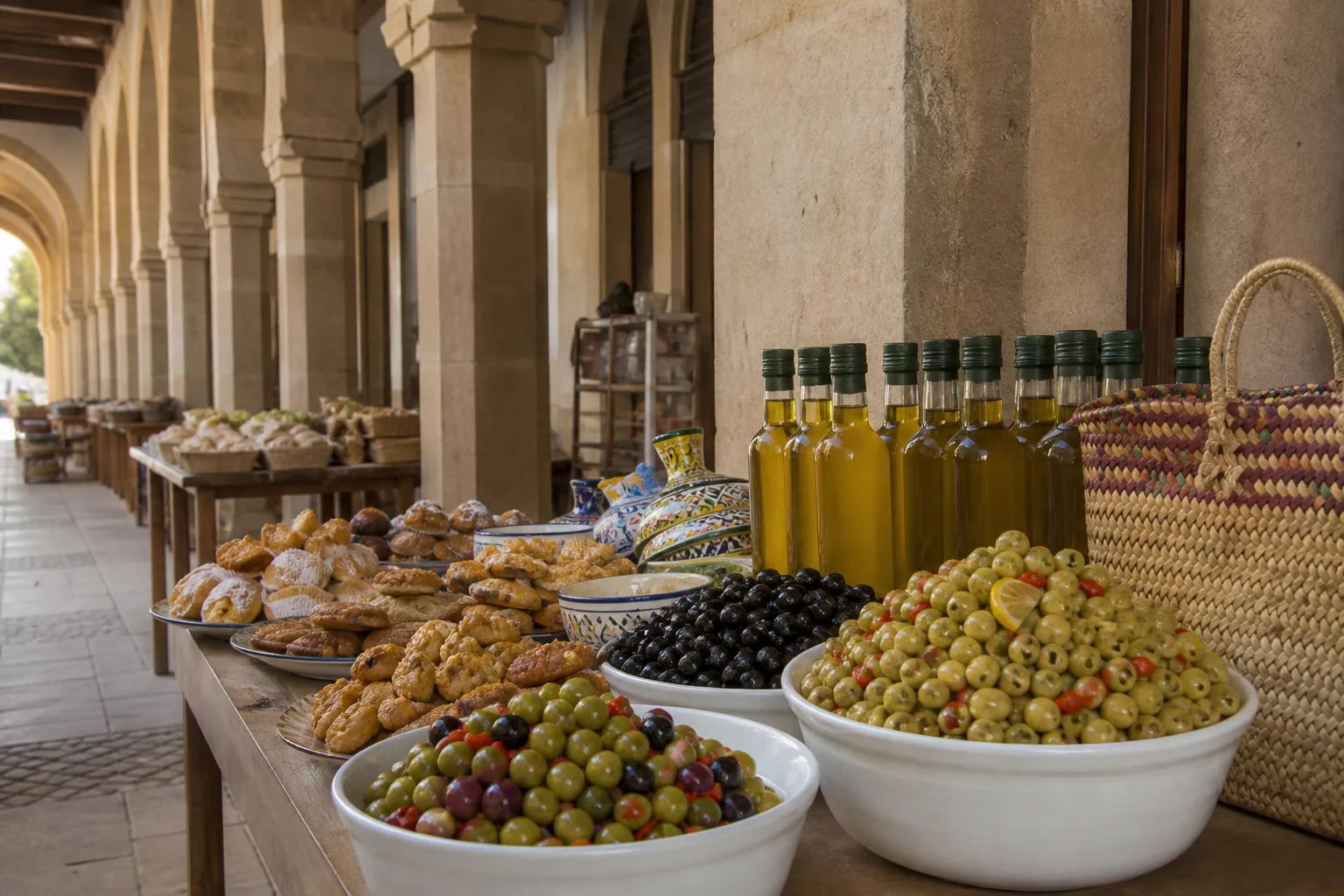
- Olives and olive paste: request a leakproof food container for travel.
- Moroccan pastries: choose a firm box for cornes de gazelle, ghriba and other delicate sweets.
- Ceramics: inspect the rim and base for cracks, then ask for protective wrapping.
- Carpets and textiles: ask about fibre, dyes, origin and maker before discussing price.
- Leather and metalwork: check seams, fastenings and finish rather than judging only by appearance.
Central Market: choose fresh fish and have it grilled
Casablanca's Central Market on Boulevard Mohammed V brings together flowers, produce, fish and small craft stalls in a historic covered building. One of its most approachable experiences is selecting fresh fish from a stall and having it grilled by a nearby market restaurant. Go before the late afternoon for a broader choice and confirm both the fish price and cooking charge before ordering.
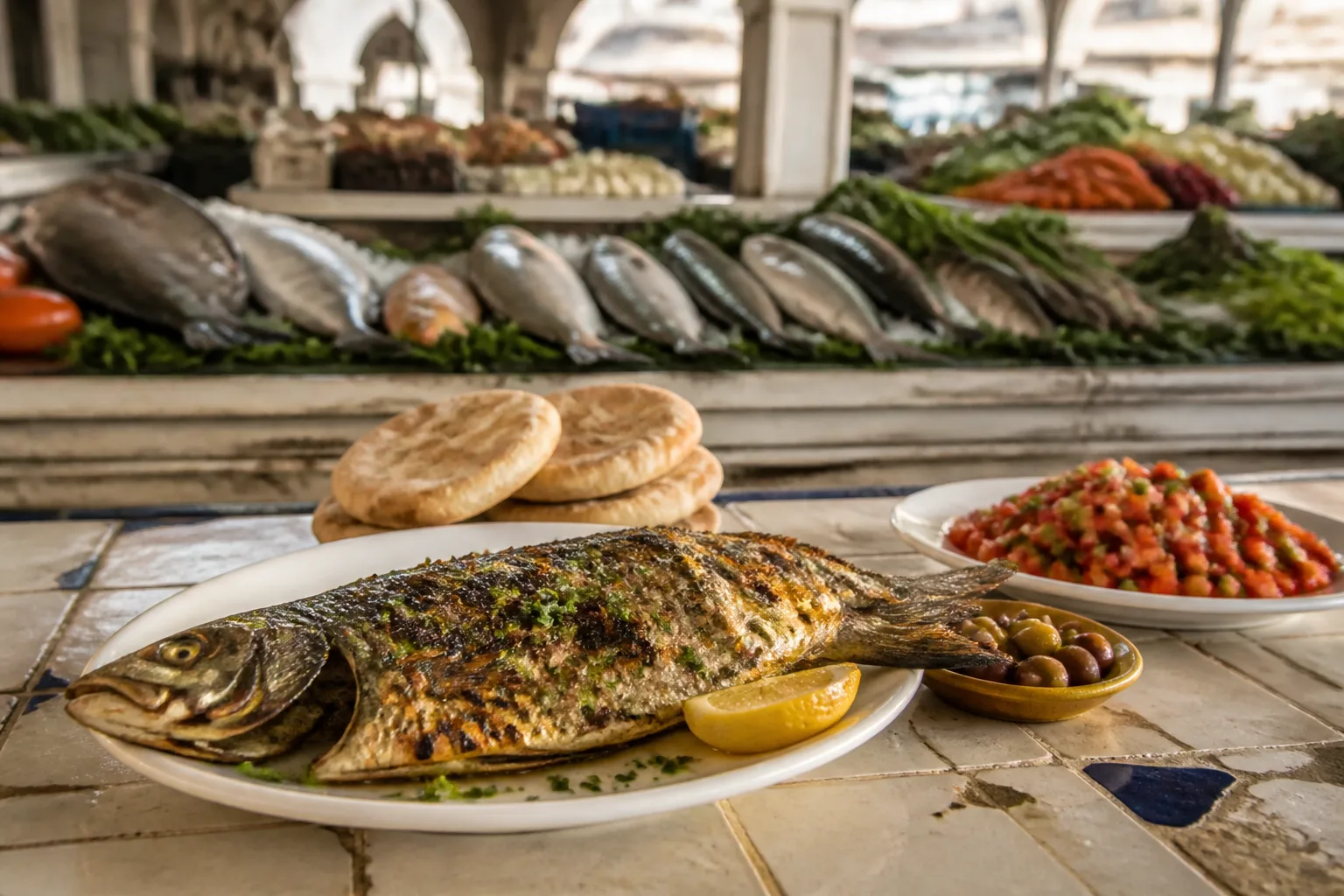
- Ask what arrived that morning rather than requesting a fixed species.
- Choose clear-eyed, fresh-smelling fish kept properly chilled on clean ice.
- Agree whether the quoted amount is per kilogram, per fish or for the complete cooked plate.
- Add Moroccan salad, bread and olives for a simple local lunch.
Old Medina, Sqala and the Art Deco centre
If you prefer an urban walk, link the Old Medina and the nearby Sqala area with the Art Deco streets around the city centre. This shows Casablanca's layers more clearly than rushing between distant attractions. Keep valuables discreet in busy streets and use your driver for a planned pickup point rather than trying to park at every landmark.
Where to eat on the route and in Casablanca
| Stop | Good choice | Planning note |
|---|---|---|
| Motorway service area | Coffee, msemen, eggs or a light snack | Fastest option for an early transfer |
| Settat | Brochettes, tagine, soup and salads | Allow 30–60 minutes depending on location |
| Central Market | Fresh fish grilled to order | Confirm fish and cooking prices first |
| Habous | Moroccan pastries, olives, tea and local dishes | Best combined with craft shopping |
| Corniche | Seafood or a relaxed café meal | Check menu prices and reserve popular venues |
What souvenirs and local products should you buy?
For travellers with limited time, Habous is the most efficient place to compare traditional crafts and edible gifts. Choose a few well-made items rather than filling the car with generic souvenirs. The Central Market is better for food you will eat locally; fresh fish is not a practical travel souvenir.
- Boxed pastries: ask how long they keep and protect them from heat.
- Olives and olive products: use factory-sealed or securely packed containers.
- Ceramics and tea glasses: request individual wrapping and place them in hand luggage when possible.
- Small woven goods or textiles: lightweight options for travellers with limited baggage.
- Spices: buy modest quantities with a clear aroma, clean storage and known origin.
Bargain calmly when prices are not displayed, but compare quality before negotiating. For expensive rugs, jewellery or antiques, request a receipt and provenance. Do not buy archaeological objects, coral, protected wildlife products or anything a seller cannot legally document.
Which Marrakech–Casablanca itinerary fits your day?
| Travel style | Suggested plan | Estimated duration |
|---|---|---|
| Direct transfer | One service-area pause, then hotel or address | 3–3.5 hours |
| Relaxed arrival | Settat lunch or Bouskoura walk, then check-in | 4–5 hours |
| Culture and crafts | Hassan II Mosque exterior or tour, then Habous | 5–7 hours |
| Food-focused | Direct drive, Central Market lunch, Habous pastries and olives | 5–6 hours |
Practical transfer advice
- Use the exact hotel or street pin: Casablanca is large, and similar names can refer to different districts.
- Add extra time for a flight, train or business meeting; city traffic is not fully predictable.
- Confirm whether your destination is central Casablanca or Mohammed V Airport before booking.
- Share passenger numbers, child-seat needs and luggage so the vehicle size is correct.
- Keep passports, money, medicine and electronics with you during every stop.
- Check mosque tours, markets and museums on the day because schedules can change.
Frequently asked questions
How far is Casablanca from Marrakech?
Central Casablanca is about 239 kilometres from Marrakech by road. The direct drive takes roughly two and a half hours in light traffic; allow three to three and a half hours with a normal comfort break.
Is Casablanca Airport on the same route as the city?
The motorway direction is similar, but Mohammed V Airport lies south of central Casablanca and has its own booking route and price. Select Casablanca Airport rather than Casablanca when catching a flight.
What is the best stop between Marrakech and Casablanca?
Settat is best for a practical café or lunch break. Bouskoura Forest is better for a short outdoor walk near the city. For sightseeing, skip both and use the extra time at Hassan II Mosque or Habous after arrival.
Where should I eat in Casablanca for a local experience?
The Central Market is a strong daytime choice for fresh fish cooked nearby. Habous works well for Moroccan pastries, olives, tea and traditional dishes, while the Corniche offers a broader restaurant selection with Atlantic views.
Where should I buy souvenirs in Casablanca?
Habous is the most convenient area for ceramics, leather, metalwork, carpets, textiles, pastries and olives. Compare several shops, inspect quality and request secure packaging and a receipt for valuable purchases.
A balanced first-time plan
Leave Marrakech after breakfast and take one short motorway break. Reach Casablanca around lunchtime, eat fresh grilled fish at the Central Market, then visit Hassan II Mosque at a confirmed tour time or walk the oceanfront esplanade. Finish in Habous for tea, pastries, olives and carefully chosen crafts before your driver takes you to the hotel.